深入理解css3中nth-child和 nth-of-type的區別
編輯:CSS特效代碼
在css3中有兩個新的選擇器可以選擇父元素下對應的子元素,一個是:nth-child 另一個是:nth-of-type。 但是它們到底有什麼區別呢?
而ele:nth-child(n)是指父元素下第n個元素且這個元素為ele,若不是,則選擇失敗。
文字未免聽起來比較晦澀,便於理解,這裡附上一個小例子:
<!DOCTYPE html>
<html lang="en">
<head>
    <meta charset="UTF-8">
    <title>demo</title>
</head>
<style>
    .demo li:nth-child(2){
        color: #ff0000;
    }
    .demo li:nth-of-type(2){
        color: #00ff00;
    }
</style>
<body>
<div>
    <ul class="demo">
        <p>zero</p>
        <li>one</li>
        <li>two</li>
    </ul>
</div>
</body>
</html>
結果如下: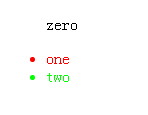 上面這個例子,.demo li:nth-child(2)選擇的是<li>one</li>節點,而.demo li:nth-of-type(2)則選擇的是<li>two</li>節點。
但是如果在nth-child和 nth-of-type前不指定標簽呢?
上面這個例子,.demo li:nth-child(2)選擇的是<li>one</li>節點,而.demo li:nth-of-type(2)則選擇的是<li>two</li>節點。
但是如果在nth-child和 nth-of-type前不指定標簽呢?.demo :nth-child(2){
color: #ff0000;
}
.demo :nth-of-type(2){
color: #00ff00;
}
這樣又會是什麼結果呢,看下html結構:
    <ul class="demo">
        <p>first p</p>
        <li>first li</li>
        <li>second li</li>
        <p>second p</p>
    </ul>
結果:
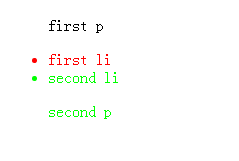
如上可見,在他們之前不指定標簽類型,:nth-child(2) 選中依舊是第二個元素,無論它是什麼標簽。而 :nth-type-of(2) 選中了兩個元素,分別是父級.demo中的第二個p標簽和第二個li標簽,由此可見,不指定標簽類型時,:nth-type-of(2)會選中所有類型標簽的第二個。
我們已經了解了nth-child和 nth-of-type的基本使用與區別,那麼更進一步nth-of-type(n)與nth-child(n)中的n是什麼呢?nth-of-type(n)與nth-child(n)中的n可以是數字、關鍵詞或公式。 數字:也就是上面例子的使用,就不做贅述。
關鍵詞:Odd 、even Odd 和 even 是可用於匹配下標是奇數或偶數的子元素的關鍵詞 注意:第一個子元素的下標是 1 在這裡,我們為奇數和偶數 p 元素指定兩種不同的背景色:
p:nth-of-type(odd)
{
background:#ff0000;
}
p:nth-of-type(even)
{
background:#0000ff;
}
公式:或者說是算術表達式
使用公式 (an + b)。描述:表示周期的長度,n 是計數器(從 0 開始),b 是偏移值。
在這裡,我們指定了下標是 3 的倍數的所有 p 元素的背景色:
p:nth-of-type(3n+0)
{
background:#ff0000;
}
若是 :nth-of-type(4n+2) 就是選擇下標是4的倍數加上2的所有元素
-
No
- 下一頁:CSS3之過渡及2D變換
小編推薦
熱門推薦